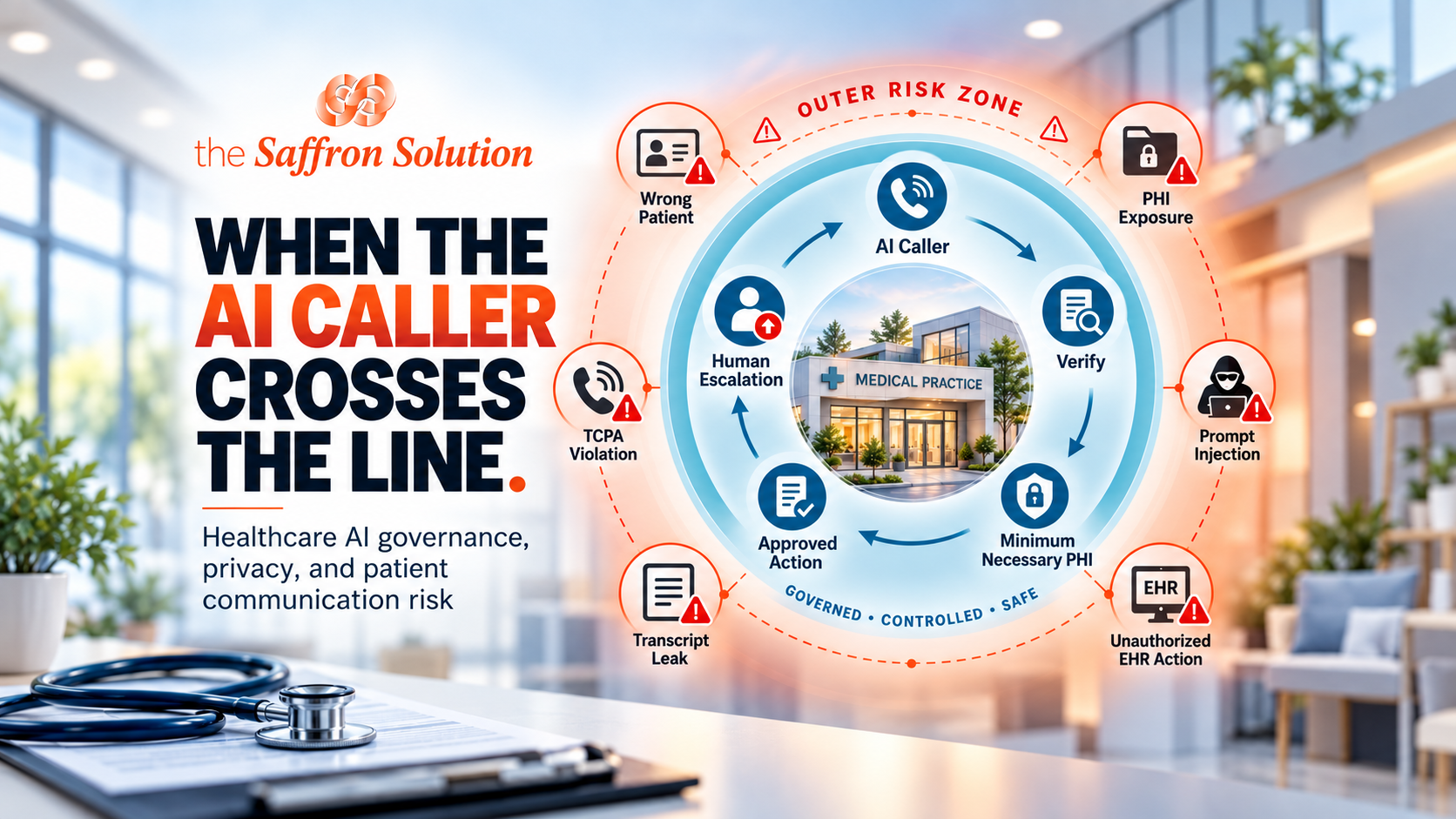
AI voice tools promise scalable outreach, but in the U.S. they collide with mistrust of unknown numbers, TCPA and FCC rules on AI-generated robocalls, HIPAA data risks, and fragile patient confidence in AI. The smarter move is to keep humans and trusted channels in front of patients and use AI behind the scenes to orchestrate timing, content, and workflows.
In other words: AI voice can help in narrow, well-governed use cases, but if it becomes your primary caller, it can quietly damage trust, compliance, and revenue.
What AI Voice Really Means in Operations
When vendors talk about “AI voice agents,” they’re usually describing systems that can:
- Auto-dial large patient lists for reminders, recalls, surveys, or balances
- Hold basic conversations (verify identity, confirm appointments, capture responses)
- Push notes or dispositions back into your EHR, PM, CRM, or ticketing systems
- Run 24/7 without fatigue, so outreach volume can grow quickly
On paper, this sounds like a digital front-desk army. In practice, these agents are operating inside a channel patients already distrust (unknown phone numbers) and a regulatory framework that treats AI voice the same as any other automated call—but with added complexity around PHI, recordings, and model training.
Core Risks and Constraints
Three constraints matter most for U.S. medical practices.
1. The phone channel is already noisy
Many patients simply do not answer calls from numbers they don’t recognize. That means:
- Scaling AI voice often just scales ignored calls and voicemails
- Pre-op, post-op, and recall outreach can get lumped in with ordinary spam
- Older adults and vulnerable patients may feel especially suspicious or overwhelmed
2. TCPA & FCC: AI voice is treated like robocalls
In early 2024, the FCC clarified that AI-generated voices on robocalls are treated as “artificial or prerecorded voices” under the Telephone Consumer Protection Act (TCPA). That means:
- You need proper, documented consent for automated calls (especially to mobile devices)
- Patients must be clearly told who is calling and how to opt out
- Violations carry the same liability as other illegal robocalls, calculated per call
3. HIPAA: these are PHI-rich conversations
During calls, patients routinely share names, dates of birth, conditions, medications, and insurance details. That is all PHI. If your AI voice vendor records, transcribes, or analyzes those calls, they are handling PHI and must be treated as a Business Associate with a BAA that covers:
- Exactly what PHI is captured, stored, and encrypted
- Who can access recordings/transcripts and for what purpose
- Whether models are trained on your data and in what form
- Retention, deletion, incident response, and breach notification
Benefits When Used Carefully
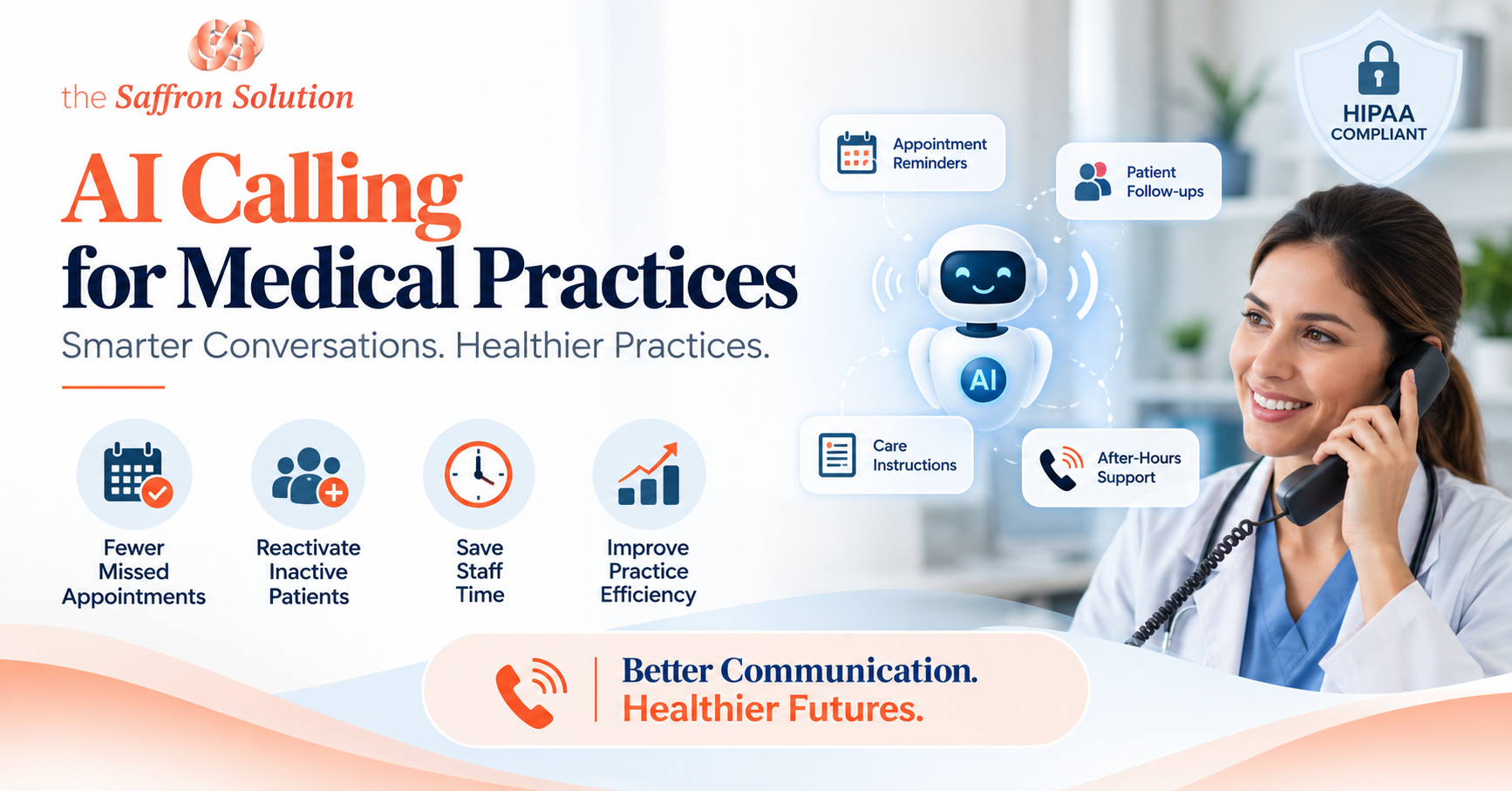
None of this means AI voice is useless. It means it’s narrowly useful when deployed with guardrails. In tightly defined scenarios, AI voice can help:
- Handle high-volume, low-sensitivity questions (parking, directions, office hours)
- Support after-hours triage by routing to nurse lines or on-call providers
- Confirm simple logistics when patients have opted in to automated voice outreach
- Summarize calls for staff to reduce manual note-taking
The key is that AI is assisting, not pretending to be the primary “voice” of care—and that patients have chosen to interact with that channel.
Real-World Scenario: When AI Voice Backfires
Imagine a multi-specialty practice that decides to “modernize” outreach by letting an AI agent call every overdue patient about balances, recalls, and screenings.
- Most patients don’t recognize the number and never pick up
- A subset answers, hears a slightly uncanny voice, and hangs up—or assumes it’s a scam
- A few share sensitive information, assuming they’re talking to a staff member
- Recordings and transcripts are stored by a vendor whose BAA and data-use terms nobody fully reviewed
The result isn’t just poor performance—it’s a pile of compliance questions and patient complaints, with little to show in terms of increased completions, collections, or loyalty.
The Future: Human-Led, AI-Assisted Communication
The pattern we see working in 2025 looks much closer to “know-show” logic in messaging than full AI voice automation. The operating model is:
- Lead with channels patients trust: HIPAA-compliant SMS, patient portal, and email for reminders, prep, and follow-ups.
- Use AI in the background: scoring no-show risk, choosing timing, drafting multilingual outreach, and summarizing responses.
- Escalate to human voice when needed: for complex conversations, bad news, shared decision-making, and service recovery.
- Make AI visible in governance, not in bedside manner: patients should understand that AI is a tool, not a replacement for clinicians.
Implementation Playbook (90 Days)
Here’s how a practice can move from “let’s try AI voice” to a safer, human-led, AI-assisted model.
Weeks 1–2 — Baseline & wiring
- Map your outreach: what you send now (reminders, recalls, billing, education), by channel
- Identify no-show hot spots, language needs, and payer/clinic patterns
- Connect EHR/PM, VoIP, CRM, and calendars; define which events/write-backs matter
Weeks 3–6 — Pilot & guardrails
- Start with one line of service or location
- Shift as much as possible to HIPAA-compliant SMS, portal, and email with clear consent language
- Deploy AI only in “back office” roles: drafting, prioritizing, summarizing
- Stand up BAAs, audit logs, role-based access, and incident-response playbooks for all vendors
Weeks 7–12 — Scale & orchestrate
- Expand templates, languages, and workflows across services and sites
- Layer in waitlist backfill, eligibility pre-checks, and same-day reshuffles via messaging
- Use dashboards to compare no-show rates, reply latency, prep compliance, and collections before vs. after
Owner & KPIs
Agentic, AI-assisted communication only works when someone owns it. Typical roles and metrics:
- Access lead: show rate, reply latency, reschedule cycle time, new-patient throughput
- Operations lead: prep compliance, idle minutes per session, staff call volume, average handle time
- RCM lead: first-pass claim acceptance, collection rate on patient balances, leakage reduction
- Compliance/Privacy lead: vendor BAAs, audit-log review cadence, incident response readiness
Compliance, Trust & EEAT
- HIPAA-first: treat every call, text, and message as potential PHI; demand BAAs and encryption in transit/at rest.
- Human-in-the-loop: staff approve sensitive outreach, clinical changes, and escalations instead of letting AI act alone.
- Transparency: clear consent, easy channel preferences, and visible opt-out in every communication.
- Authorship & accountability: named clinical/operational leads, with editorial and compliance review of AI-assisted content.
Where the Saffron Solution Fits
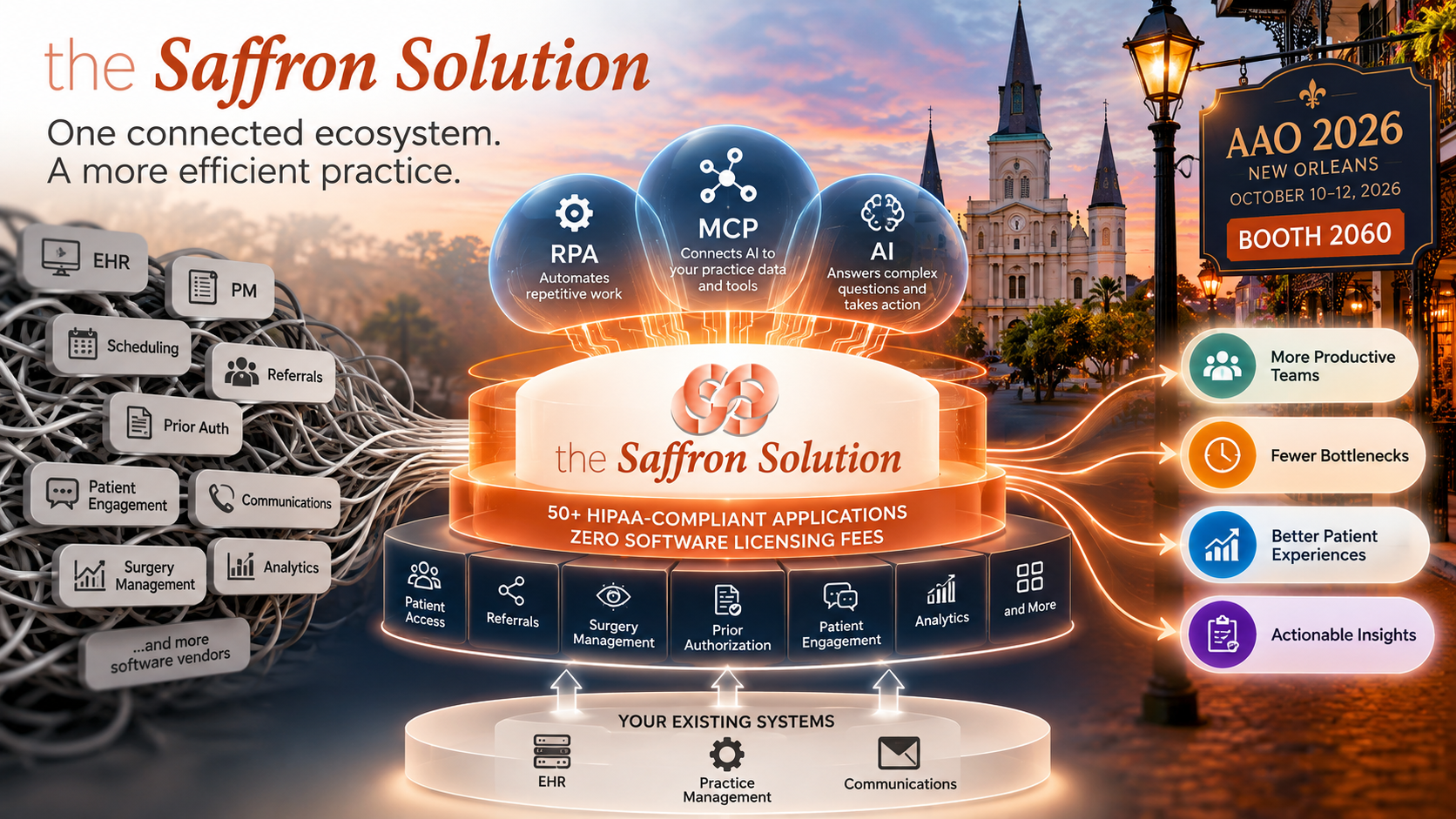
the Saffron Solution is designed around this human-led, AI-assisted model. Instead of putting AI voice in front of patients, we provide an operating layer that connects EHR + PM + VoIP to the work that actually drives growth:
- Referrals, recalls, reminders, and waitlist backfill
- Eligibility checks and financial transparency to reduce surprise bills
- Multilingual, omnichannel patient outreach that meets patients where they are
- Dashboards that explain why metrics move, not just what changed
Practice Automation. Intelligent Human Care. One Platform to Power It All. AI and automation handle the orchestration; your humans stay in front of patients, where trust is built.